Coucheta Rattan Shoe Cabinet for Narrow Entryways
The Coucheta shoe storage cabinet is built for the entryway most shoe racks don't fit — 9.4 inches deep, freestanding, and finished in hand-woven natural rattan over a white oak frame. Four flip-door compartments keep everything closed and organized without the bulk of a traditional shoe armoire. It's designed for apartment entryways, narrow hallways, and any space where depth is the deciding factor.

The Cabinet, Configured and Ready
Rattan Shoe Cabinet (4-Drawer White)
See on AmazonSee more products
Discover the full product lineup with current selection on Amazon.
All products on AmazonCabinet Specifications at a Glance
One model, one configuration — here are the specs that answer the questions buyers actually ask before committing to an entryway piece.
| Dimensions (D × W × H) | 9.4 × 39.4 × 34.6 inches |
|---|---|
| Depth from wall | 9.4 inches |
| Weight | 55 pounds |
| Number of compartments | 4 flip-door compartments |
| Door style | Flip-open (bottom pivot) |
| Internal height settings | 3 adjustable positions per compartment |
| Confirmed pair capacity | 32 pairs including size 13 |
| Frame material | MDF with hand-woven natural rattan panels |
| Legs | Metal |
| Finish / color | White with natural rattan |
| Room type | Entryway, living room, hallway |
| Customer rating | 4.5 out of 5 stars (413 reviews) |
This cabinet is the right fit for entryways where depth is the hard constraint — if your wall can spare 9.4 inches and your household manages up to 32 pairs of mixed footwear, the adjustable internal compartments and flip-door design handle the rest.
What to Know Before You Measure Your Entryway
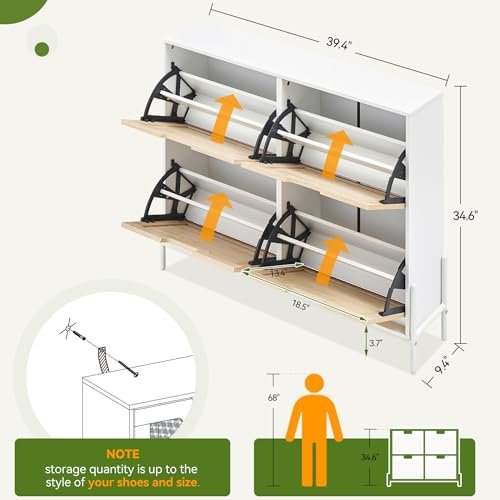
The single most important spec for any entryway shoe cabinet is depth — the distance the piece projects from the wall. Most hallway tables run 12 to 14 inches deep; most entryways can't spare that. The Coucheta cabinet's 9.4-inch depth is shallower than a standard interior door casing and sits flush against walls where other furniture simply won't. If you're working with a narrow corridor between your front door and your first piece of furniture, measure that gap before anything else. At 9.4 inches out from the wall, this cabinet clears it for most apartments and townhouses.
The full footprint is 9.4 × 39.4 × 34.6 inches — about 39 inches wide and just under 35 inches tall. That puts the top surface at a comfortable height for dropping keys or setting a bag, and the width accommodates four full compartments side by side without requiring a dedicated shoe room. At 55 pounds, it ships assembled enough that placement is a two-person job, but you won't need to build a piece of furniture from scratch.
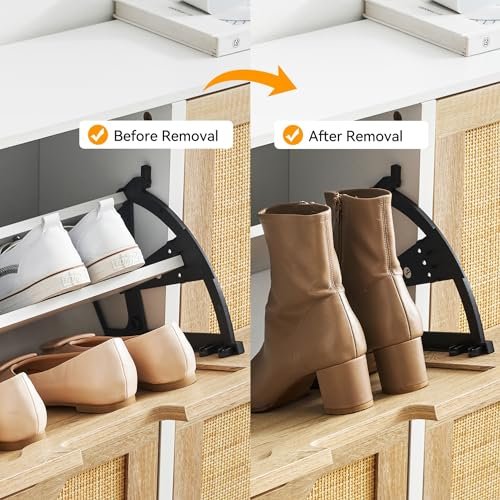
The flip-door design is a functional choice, not just an aesthetic one. Doors that swing open from the bottom let you see every shoe in the compartment at once — no reaching into a dark shelf or pulling out a stack to find the pair underneath. Each compartment includes adjustable internal dividers, giving you three height configurations to match footwear: lowest setting for flats and sandals, middle for standard sneakers and dress shoes, top setting for ankle boots and low-profile boots. For anything knee-height or taller, a separate tall storage solution will serve better — be realistic about what fits in a 34.6-inch-tall cabinet.
Real Entryways This Cabinet Actually Fits
The buyer who gets the most out of this cabinet lives in an apartment or townhouse with a genuine shoe problem at the front door. Open racks show the clutter; over-door organizers require the right door clearance; tall shoe armoires need depth they don't have. This cabinet closes, looks like furniture, and sits 9.4 inches from the wall — which means it works in the space between a front door and a coat closet, or against the short wall of a foyer where a console table would project too far.
The four-compartment configuration is confirmed to organize 32 pairs including size 13, based on a video review by Amazon reviewer Elly Watson. That's a meaningful real-world data point: four compartments at the adjustable internal settings handle a mix of men's and women's footwear, including larger sizes, without the pair count becoming theoretical. If your household runs size 14 or above in wide-fit work boots, some compartments will be tight — the interior height settings accommodate most footwear, but unusually large or rigid boots may need the cabinet's bottom compartment set to maximum height.
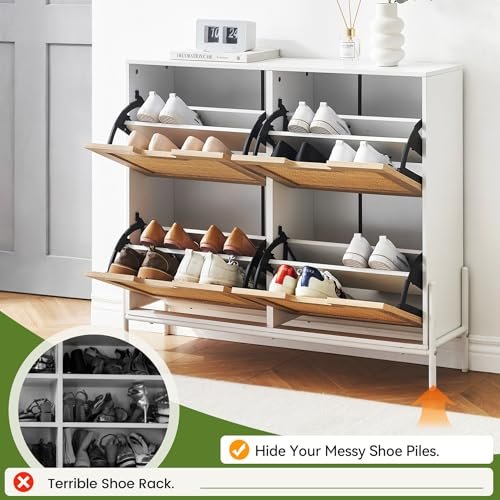
The white finish and natural rattan texture work against warm neutrals, light gray walls, and warm wood furniture — the aesthetic reads as organic modern or coastal. If your entryway is all dark espresso tones or heavily industrial hardware, the contrast will be noticeable. The metal legs keep the cabinet raised slightly off the floor, which also makes it easier to sweep or vacuum underneath — a small practical detail that matters in a high-traffic entryway spot.
Keeping the Rattan Cabinet in Good Shape
The cabinet's body is MDF with hand-woven natural rattan on the door panels — not solid wood, and not synthetic wicker. That distinction matters for care. The MDF frame handles normal interior conditions well, but sustained moisture is a problem: don't place the cabinet directly against an exterior wall that sweats condensation in winter, and wipe down any mud or water tracked in from outside quickly rather than letting it sit. The rattan weave is hand-finished and durable under normal use, but should be cleaned with a dry cloth or a lightly damp one — wet cleaners and soaking will degrade the natural fiber over time.
The metal legs raise the cabinet off the floor, which helps in entryways where dirt and debris collect at floor level. Periodically check that the leg hardware stays tight, especially in the first few weeks after assembly when pieces are settling. If the cabinet will sit on hardwood or tile, adding felt pads to the leg bases prevents scuffing and keeps the cabinet from shifting when a drawer is opened and closed repeatedly.
- Moisture: Wipe water and mud off immediately. Don't place against condensation-prone exterior walls.
- Cleaning the rattan: Dry cloth for regular dust. A lightly damp cloth for spot cleaning. No soaking, no spray cleaners applied directly to the weave.
- Leg hardware: Check tightness after the first two weeks of use and every few months after that.
- Floor protection: Add felt pads to the metal leg bases on hardwood or tile floors.
- Sunlight: Avoid positioning the cabinet where direct sustained sunlight hits the rattan panels — prolonged UV exposure will fade and dry out the natural fiber.
- Tip-over safety: The cabinet ships with hardware for wall anchoring. In households with young children or large dogs, install the anti-tip restraint — the piece is 34.6 inches tall and freestanding, and anchoring it takes five minutes.
Frequently Asked Questions
Will this cabinet actually fit in a narrow apartment entryway?
At 9.4 inches deep, it's shallower than most entryway tables and narrower than a standard interior door casing. If you have a wall that's at least 9.4 inches clear from door swing or adjacent furniture, the cabinet sits flush against it. The 39.4-inch width is the other dimension to check — measure the available wall width before ordering, since this is a 39-inch-wide piece, not a slim tower.
Can it hold men's larger shoe sizes, like a size 12 or 13?
Yes. The four-compartment version has been confirmed in a video review to organize 32 pairs including size 13. The three adjustable height settings per compartment give you room to configure around larger footwear. Size 14 and above in wide-fit boots may be a tight fit in the standard configuration — the interior length of each compartment is the constraint, not the height settings.
What's the difference between the flip-door design and a standard hinged cabinet door?
A flip door pivots outward from the bottom rather than swinging open on a side hinge. The practical result: you can see the full contents of the compartment at once without crouching or reaching past a door that's swung into the entryway. In a narrow hallway where a side-swinging door would project into foot traffic, the flip-door design also takes up less clearance when open.
Is the rattan real or synthetic?
The door panels are hand-woven natural rattan — not printed laminate, not synthetic wicker. The cabinet body underneath is MDF, which is standard for furniture in this category and is what keeps the piece stable and the price accessible. Don't describe it as "solid wood" — it isn't — but the rattan weave itself is natural material, not a surface finish.
Does it need to be anchored to the wall?
The cabinet ships with anti-tip wall-anchoring hardware. At 34.6 inches tall and freestanding, it's stable under normal use, but if you have young children or large pets in the house, installing the tip-over restraint is worth the five minutes it takes. The hardware attaches the top of the cabinet to the wall and prevents forward tipping if someone pulls on an open compartment door.
How do I clean the rattan without damaging it?
A dry cloth handles regular dust. For spot cleaning — muddy shoe contact, scuffs — use a lightly damp cloth and let the area air dry fully before closing the compartment doors. Don't apply spray cleaners directly to the rattan weave, and avoid soaking it. Natural rattan degrades with repeated moisture exposure, so quick wipe-downs rather than wet cleaning is the right habit for an entryway piece.